
Token Approvals, Gas Optimization, and the Reality of a Multi-Chain Wallet
Many DeFi users assume that token approval management is mainly a matter of clicking “approve” before a swap. That is the first misconception to correct. An approval is not the transfer itself; it is a permission recorded in a smart contract that may allow another contract to move a specified amount of a token from your address. The transaction can be small, familiar, and easy to ignore, while the permission it creates may remain relevant long after the original trade is finished.
A second misconception is that the cheapest transaction is always the best transaction. In practice, gas optimization is not simply about finding the lowest displayed fee. It is about reducing unnecessary actions while preserving control over permissions, selecting a suitable network, and avoiding errors that cost more than the original saving. For users moving between Ethereum, layer-2 networks, and other compatible chains, the wallet is therefore less like a passive account and more like a decision interface.
What a token approval actually does
Most Ethereum-compatible tokens follow a common contract pattern in which an owner can authorize a spender to use tokens on the owner’s behalf. When a decentralized exchange or lending application asks for approval, the token contract records that the application’s contract may transfer tokens from the wallet, subject to the allowance. A later swap or deposit usually uses that permission through a separate transaction.
This distinction matters because the application front end and the approval permission are not identical objects. A user may stop visiting a protocol, uninstall a browser extension, or move assets to another strategy, but the allowance can remain on-chain. That does not mean the protocol will automatically take funds. It does mean that a vulnerable, compromised, or incorrectly identified spender could become relevant if tokens remain in the wallet. Approval management is consequently a form of access control, not merely transaction housekeeping.
There is also an important nuance around “unlimited approval.” Some applications request a very large allowance to avoid asking the user to approve every future interaction. This can reduce friction and sometimes save a transaction, but it expands the potential permission surface. A limited approval can narrow exposure, although it may require another approval later. Neither choice is universally correct: the appropriate setting depends on the value at risk, the user’s confidence in the protocol, how frequently the application will be used, and the cost of another transaction.
Users should also distinguish between revoking an allowance and recovering already lost assets. Revocation changes a token contract’s recorded permission; it does not reverse a completed transfer, invalidate a malicious signature that has already been exploited, or repair a compromised private key. If a wallet is exposed, changing allowances may be insufficient. This is one reason transaction review and operational separation—such as using a lower-value wallet for experimentation—can be more valuable than treating revocation as a complete safety solution.
Why approval management is also a gas question
Every approval transaction consumes network resources. On a congested network, its dollar cost may be meaningful, particularly for smaller portfolios. Yet avoiding approvals altogether is not possible when a contract needs permission to move a token. The practical optimization is to understand when an approval is necessary, whether an existing allowance can be reused, and whether a protocol supports a different authorization design.
A common workflow is two transactions: first approve the token, then execute the swap, deposit, or repayment. Some newer contract patterns can combine authorization data with the action, but support varies by token, protocol, wallet, and network. A user should not assume that a single confirmation is inherently safer or cheaper; the underlying authorization still needs to be understood. Bundling can reduce interaction friction, but it may also make the transaction more complex to inspect.
Gas prices themselves are only one part of the calculation. A transaction with a low gas price can still be expensive if it performs unnecessary computation or fails. A failed transaction generally consumes gas without producing the intended state change. Selecting a network with lower fees may help, but only if the desired liquidity, token representation, and application support are actually present there. Bridging assets to save on a later swap can introduce bridge fees, waiting periods, smart-contract risk, and the possibility of using a different asset representation than expected.
For a US-based DeFi user, the practical lesson is to compare the complete action rather than the headline fee. Ask: is an approval required, is an allowance already active, what network is being used, does the application have sufficient liquidity, and what happens if the transaction fails? A wallet that surfaces these questions before signing can improve decision quality, but it cannot remove the economic and technical trade-offs underneath them.
The multi-chain wallet problem is coordination, not just convenience
A multi-chain wallet brings accounts, assets, and applications into one interface across several networks. That convenience addresses a genuine problem: users no longer need to manage a completely separate workflow for every chain. However, consolidation can also create a dangerous illusion that all networks behave alike. They may share address formats or smart-contract conventions while differing in gas tokens, confirmation behavior, bridge assumptions, transaction ordering, and application liquidity.
Approvals are chain-specific. An allowance granted on one network does not automatically authorize the same spender on another network, even when the wallet displays the same address. Conversely, a user who switches networks may mistakenly believe that a previous approval applies everywhere. Asset symbols also deserve attention. A token with the same ticker can represent different contracts, and a bridged asset may not be interchangeable with the version used by a particular application.
This is where a useful mental model emerges: a multi-chain wallet is not one account with one risk profile. It is a collection of account-and-network states presented through one interface. Each state has its own balances, approvals, contracts, gas requirements, and transaction history. The interface reduces navigation costs, but the user remains responsible for identifying the correct chain and contract.
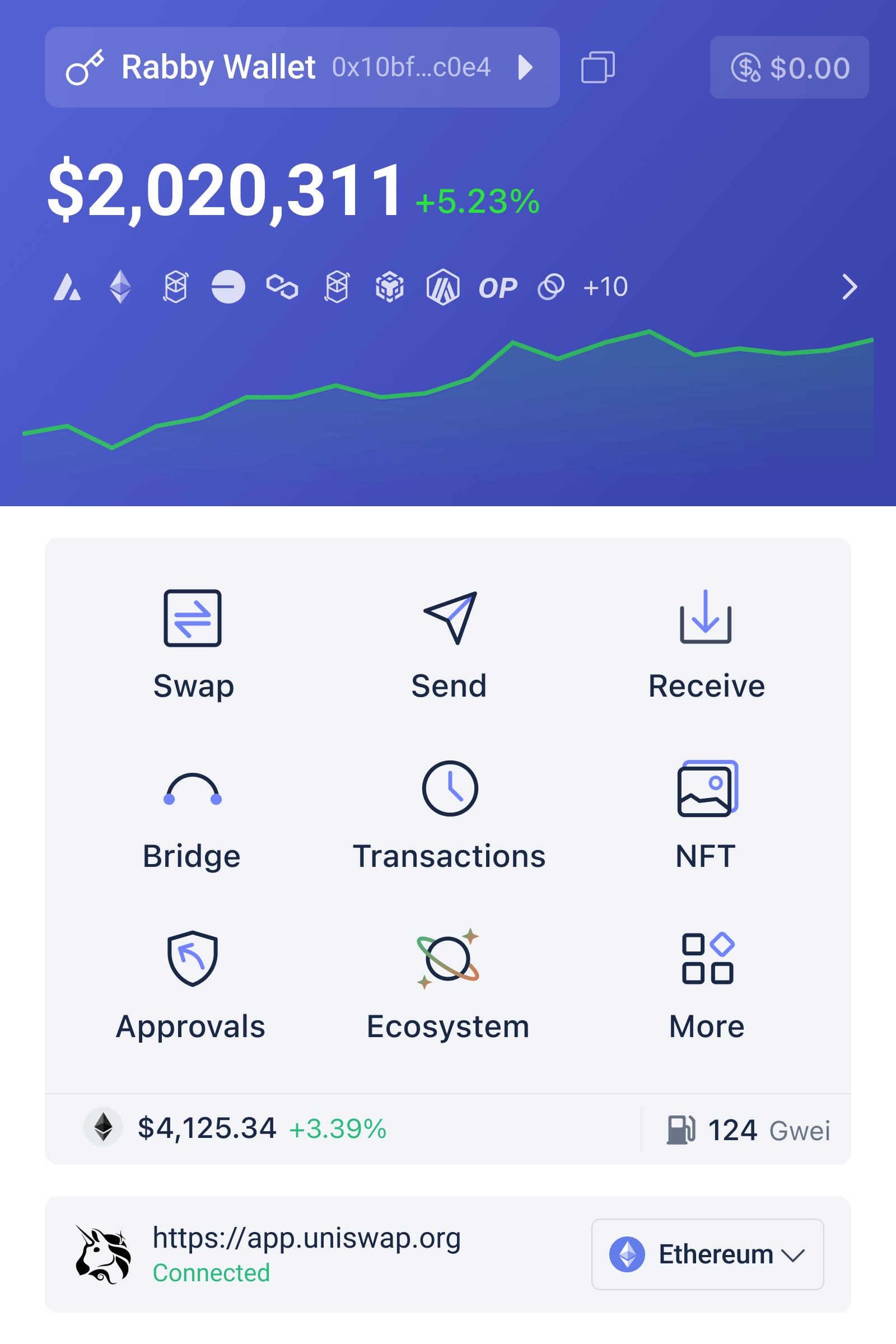
Before installing a wallet extension, users should obtain it through a source they trust and verify the extension’s identity and permissions. Those looking for the rabby wallet can use the linked installation resource as a starting point, then confirm that the browser presents the expected extension and that the download process has not been redirected. A wallet interface can assist with transaction simulation, network selection, and approval visibility where supported, but no interface can guarantee that every contract is honest or every simulation predicts future protocol behavior.
Myths that lead to expensive decisions
Myth: revoking every approval is always the safest strategy. Reality: revocation reduces certain forms of residual permission, but it costs gas and does not protect against a stolen seed phrase, a malicious signature, or a transaction that has already executed. A better approach is risk-based review. High-value assets, abandoned protocols, suspicious spenders, and rarely used wallets deserve more attention than a blanket rule applied without regard to cost.
Myth: unlimited approvals are automatically reckless. Reality: they create a broader permission than a precise allowance, so the downside is real. But a limited approval can encourage repeated approvals, adding cost and more opportunities to sign the wrong transaction. The relevant question is not whether one setting is morally correct. It is whether the permission matches the user’s intended exposure and the protocol’s expected use.
Myth: a low-fee chain eliminates risk. Reality: lower execution cost can make experimentation more affordable, but it can also make users sign more transactions with less scrutiny. The dominant risk may shift from gas expense to contract risk, bridge risk, liquidity risk, or operational confusion. Cheap transactions are not free transactions in the broader sense.
Myth: the wallet confirms that a transaction is safe. Reality: wallets can present warnings, decode contract interactions, and make unusual permissions easier to notice, but they rely on available data and imperfect interpretation. Contract upgrades, oracle failures, economic attacks, and deceptive application interfaces may not be fully visible in a signing prompt. Warnings should improve investigation, not replace it.
A reusable approval and gas checklist
Before signing, identify the network, the token contract, the spender, the requested allowance, and the action that will follow. Then ask whether the spender is the protocol contract you intended to use rather than an unrelated address supplied by a compromised front end. If the allowance is unusually large, decide whether the convenience is worth the additional exposure. If the transaction is being made on a new chain, confirm the native gas token and the exact asset version.
After using a protocol, do not assume that an idle approval is harmless simply because the wallet balance is currently low. Review permissions when a strategy is abandoned, a protocol experiences a security incident, or assets are moved into a different operational wallet. At the same time, avoid paying for revocations mechanically when the allowance is immaterial and the network is expensive. The decision should reflect both security benefit and transaction cost.
For gas optimization, group actions when the protocol genuinely supports a safe combined flow, reuse an appropriate allowance when the risk is acceptable, and avoid unnecessary test transactions on expensive networks. Conversely, do not compress several important decisions into one opaque transaction merely to save a fee. Transparency has an economic value: understanding what is signed can prevent losses that dwarf the gas bill.
What to watch as DeFi wallets evolve
The next stage of wallet design is likely to be judged less by the number of supported chains than by the quality of context shown at signing time. Useful directions include clearer spender identification, better differentiation between approval and transfer actions, more consistent warnings across networks, and tools that help users compare the cost of limited versus recurring permissions. These are conditional possibilities, not guaranteed outcomes, because wallet interfaces depend on contract standards, application cooperation, and the quality of on-chain data.
The unresolved issue is that usability and security often pull in opposite directions. More prompts can educate users but also create approval fatigue. More automation can reduce repetitive work but may hide meaningful choices. The strongest design will not simply maximize warnings or minimize clicks. It will make the important decisions visible while keeping routine actions efficient.
Frequently asked questions
Is a token approval the same as sending tokens?
No. An approval records permission for a specified spender contract to move tokens later. The actual transfer, swap, deposit, or repayment normally occurs in a separate contract interaction, although some protocols can combine authorization and action in one flow.
Does revoking an approval save gas?
Usually not immediately. Revoking is itself an on-chain transaction and therefore consumes gas. Its purpose is to reduce an existing permission, not to lower the cost of the original approval. It may be worthwhile when the allowance or protocol presents meaningful residual risk, but the benefit should be weighed against the fee.
Why can the same wallet address behave differently across chains?
The address may be the same, but balances, approvals, contracts, gas tokens, and application states are recorded separately on each network. Treat every chain as a distinct operating environment and verify the network before signing.
The most accurate way to think about token approvals is not as an annoying prelude to DeFi, but as permissions management attached to economic activity. Gas optimization then becomes more than chasing a smaller number: it is the disciplined reduction of unnecessary transactions without hiding the risks that those transactions represent. A multi-chain wallet can make that discipline easier, provided the user remembers the central boundary—one interface does not turn many blockchains into one system.